
What Is the Service Life of a Tractor Trolley Hydraulic Hose and How to Extend It?
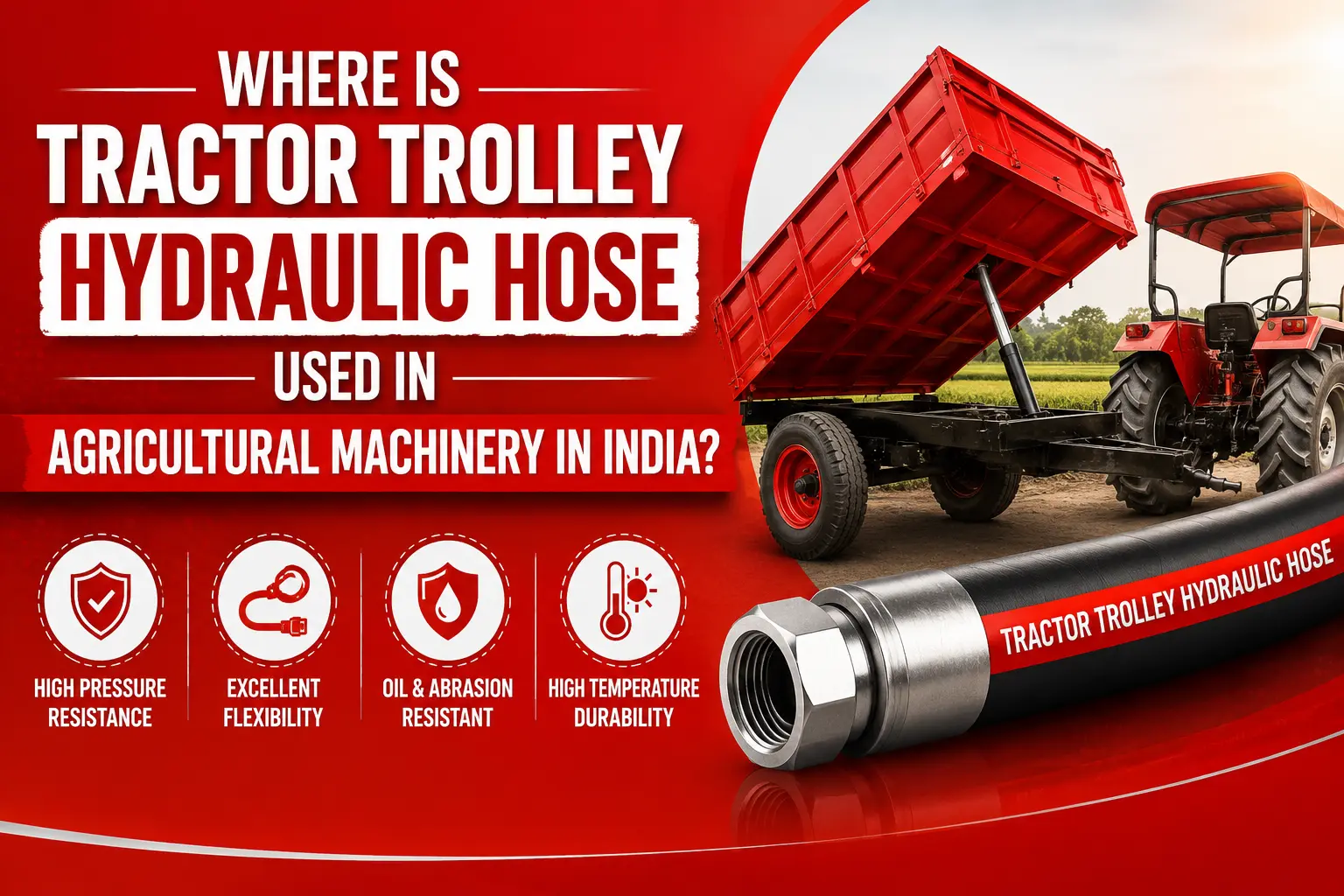
Modern tractor trolleys depend on hydraulic power to lift and unload crops, soil, fertiliser, construction material, and other heavy loads. The Tractor Trolley Hydraulic Hose carries pressurised hydraulic oil between the pump, control valve, and lifting cylinder. Although it may appear to be a simple component, its condition directly affects the safety, lifting capacity, and reliability of the complete trolley.
There is no fixed replacement age that applies to every Tractor Trolley Hydraulic Hose. Its actual service life depends on working pressure, operating temperature, installation, workload, hose quality, storage, and maintenance. A hose used occasionally under controlled conditions may remain dependable for several years, while one exposed to overloading, sharp bending, abrasion, and contamination may deteriorate much earlier.
Understanding the causes of hose ageing helps farmers, trolley manufacturers, dealers, and repair workshops prevent sudden breakdowns during critical farming periods.
What Is the Expected Service Life of a Tractor Trolley Hydraulic Hose?
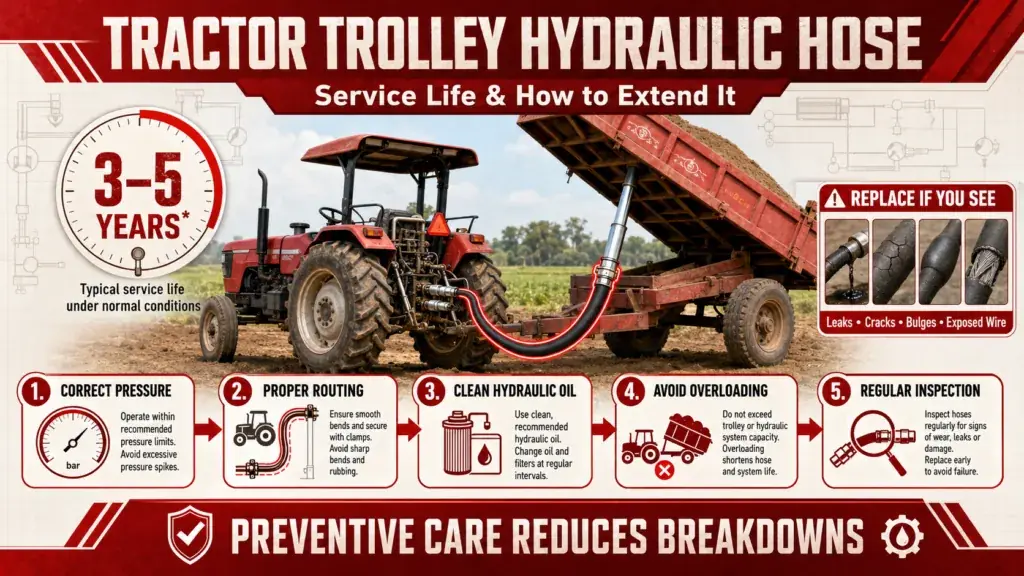
Under normal agricultural conditions, a quality Tractor Trolley Hydraulic Hose may commonly provide around three to five years of service. This range should only be treated as a practical estimate, not a guaranteed replacement interval. A hose may require earlier replacement if it shows visible deterioration or has experienced excessive pressure, severe abrasion, accidental crushing, or prolonged heat exposure.
The service life of a Hydraulic Hose Pipe is measured by more than its age. Operating hours and pressure cycles are equally important. Every time the trolley is raised or lowered, its hose expands slightly under pressure. Repeated pressure cycles gradually affect the tube, reinforcement, outer cover, and end connections.
A well-manufactured High Pressure Hydraulic Hose is built to withstand these cycles. However, no hose can remain safe indefinitely, particularly when it is used beyond its specified working conditions.
Can a hydraulic hose that looks normal from outside still be damaged internally? Yes. Internal tube deterioration, wire fatigue, contamination, or fitting damage may develop before serious external cracking becomes visible.
Why Do Tractor Trolley Hydraulic Hoses Wear Out?
Under normal agricultural conditions, a quality Tractor Trolley Hydraulic Hose may commonly provide around three to five years of service. This range should only be treated as a practical estimate, not a guaranteed replacement interval. A hose may require earlier replacement if it shows visible deterioration or has experienced excessive pressure, severe abrasion, accidental crushing, or prolonged heat exposure.
The service life of a Hydraulic Hose Pipe is measured by more than its age. Operating hours and pressure cycles are equally important. Every time the trolley is raised or lowered, its hose expands slightly under pressure. Repeated pressure cycles gradually affect the tube, reinforcement, outer cover, and end connections.
A well-manufactured High Pressure Hydraulic Hose is built to withstand these cycles. However, no hose can remain safe indefinitely, particularly when it is used beyond its specified working conditions.
Can a hydraulic hose that looks normal from outside still be damaged internally? Yes. Internal tube deterioration, wire fatigue, contamination, or fitting damage may develop before serious external cracking becomes visible.
Does Frequent Trolley Use Reduce Hose Life?
Does raising and lowering the trolley several times each day reduce the life of its hose? Frequent operation does not automatically cause premature failure if the hose is correctly selected and installed. However, every lifting cycle adds stress to the reinforcement and fittings.
A trolley used for seasonal crop transport experiences a different duty cycle from one that handles sand, bricks, or soil throughout the year. Continuous commercial operation requires a durable High Pressure Hydraulic Hose with a suitable pressure rating and sufficient resistance to impulse fatigue.
Regular movement can also cause bending near the fittings. A Tractor Trolley Hydraulic Hose should never flex sharply at the crimped ends. Concentrated bending in this area may weaken the reinforcement and cause oil leakage close to the fitting.
How Incorrect Installation Shortens Hose Life
Even a premium Hydraulic Hose Pipe can fail early when it is routed incorrectly. Twisting is one of the most common installation errors. A twisted hose cannot move naturally when pressure is applied, which creates additional stress in its reinforcement.
The bend radius also matters. Installing a Tractor Hydraulic Hose in a tighter curve than recommended can restrict oil flow and place abnormal force on the hose body. The assembly should have enough length to move with the lifting mechanism, but it should not be so long that it hangs, rubs, or becomes trapped between moving parts.
Compatible Tractor Hydraulic Hoses and Fittings must be used together. A fitting that does not match the hose construction, size, or pressure capacity can create leakage or separation. The crimping diameter must also follow the hose and fitting manufacturer’s specifications.
Signs That a Tractor Trolley Hydraulic Hose Needs Replacement
A Tractor Trolley Hydraulic Hose should be examined before the start of heavy seasonal work and checked regularly during operation. Oil seepage around the hose body or end connection is an immediate warning. Even a small leak can develop into a sudden rupture under pressure.
Cracks, cuts, bubbles, flattened sections, exposed wire, or severe surface abrasion indicate that the protective cover has been compromised. A hose that has become unusually hard, soft, swollen, or kinked should also be removed from service.
Operators should pay attention to changes in trolley performance. Slow lifting, jerky movement, unusual noise, loss of lifting force, or repeated pressure reduction can indicate a problem with the Hydraulic Hose Pipe, pump, valve, cylinder, or hydraulic oil.
A damaged Tractor Trolley Hydraulic Hose should not be repaired with tape, clamps, or makeshift sleeves. These methods cannot restore the pressure-containing reinforcement. Replacing the complete assembly is the safer solution.
How to Extend the Service Life of the Hose
Correct hose selection is the foundation of longer service. The working pressure of the High Pressure Hydraulic Hosemust meet or exceed the maximum pressure generated by the tractor and trolley system. Selection should also consider oil compatibility, internal diameter, temperature range, bend radius, and external working conditions.
Proper routing protects the Tractor Trolley Hydraulic Hose from stretching, twisting, crushing, and abrasion. Clamps can control unwanted movement, while protective sleeves can reduce damage in areas where occasional contact cannot be avoided. Clamps should support the assembly without preventing the natural movement required during lifting.
Hydraulic oil must be kept clean and at the correct level. Contaminated oil can damage the internal tube as well as the pump, valve, seals, and cylinder. Dirty couplings should be cleaned before reconnection so that soil and moisture do not enter the system.
Operators should lift only within the trolley’s rated capacity. Overloading places unnecessary pressure on the Tractor Hydraulic Hose and every other hydraulic component. Smooth operation of the control valve also helps limit sudden pressure shocks.
When the trolley will remain unused for a long period, the hydraulic system should be depressurised and protected from direct sunlight, moisture, extreme temperatures, and chemical exposure. These practices help preserve the flexibility of the Tractor Trolley Hydraulic Hose.
Why Hose and Fitting Quality Must Be Considered Together
Reliable Tractor Hydraulic Hoses and Fittings function as a complete assembly. Installing a good hose with a poor fitting, or a quality fitting on an incompatible hose, does not create a safe connection.
Professional assembly includes selecting the correct fitting profile, preparing a clean hose end, inserting the fitting completely, and applying the specified crimp. Experienced Hydraulic Hose Pipe Manufacturers can help buyers select a hose construction and fitting combination suited to agricultural pressure and movement.
Farmers and equipment manufacturers should avoid choosing a replacement solely because it has the same visible diameter as the old hose. The reinforcement, pressure rating, inner tube, and coupling specifications of the Tractor Trolley Hydraulic Hose must also match the application.
Choose the Right Hydraulic Hose Pipe for Demanding Equipment
Selecting a Hydraulic Hose Pipe requires more than checking its length and diameter. Mangla Rubber Industries supplies hydraulic hose solutions for agricultural and industrial systems where pressure stability, flexibility, and resistance to demanding conditions are essential.
For applications involving heavy loads and repeated pressure cycles, choosing the correct High Pressure Hydraulic Hose can reduce leakage, improve lifting performance, and help protect expensive hydraulic components. Contact Mangla Rubber Industries to discuss the operating pressure, hose size, fitting requirement, and working environment of your equipment.
Read Our Previous Tractor Trolley Hose Guide
Would you like to understand where a Tractor Trolley Hydraulic Hose is used across modern agricultural equipment? Read our previous guide, Is Tractor Trolley Hydraulic Hose . It explains the role of hydraulic hoses in tipping trolleys, loaders, cultivators, rotavators, and other farming implements.
The guide also explains why durable Tractor Hydraulic Hoses and Fittings are important for retaining pressure and supporting efficient field operations. It is a useful resource for farmers, dealers, repair workshops, and agricultural equipment manufacturers.
Follow Mangla Rubber Industries on LinkedIn
Follow Mangla Rubber Industries on LinkedIn for product information, hose-selection guidance, manufacturing updates, and practical maintenance insights. Stay connected to learn more about Tractor Hydraulic Hose applications and dependable industrial hose solutions.
Conclusion
The service life of a Tractor Trolley Hydraulic Hose depends on how well it is selected, installed, operated, inspected, and stored. Although a quality hose may remain in service for several years, its physical condition and operating history are more important than age alone.
Correct pressure selection, proper routing, clean hydraulic oil, compatible fittings, controlled loading, and timely inspection can considerably extend hose life. Working with established Hydraulic Hose Pipe Manufacturers also gives buyers access to correctly specified assemblies for demanding agricultural applications.
A worn Tractor Trolley Hydraulic Hose should always be replaced before it bursts. Preventive replacement costs far less than hydraulic system damage, lost oil, equipment downtime, or an accident during trolley operation.
Frequently Asked Questions
1.What is the average life of a Tractor Trolley Hydraulic Hose?
A quality Tractor Trolley Hydraulic Hose may commonly last around three to five years under normal conditions. Actual life depends on operating pressure, workload, installation, temperature, maintenance, and environmental exposure.
2.How often should a tractor hydraulic hose be inspected?
A Tractor Hydraulic Hose should be visually checked before periods of heavy use and inspected regularly during operation. Immediate inspection is required after overloading, accidental impact, crushing, or unusual hydraulic behaviour.
3.Can a leaking hydraulic hose be repaired?
A pressurised Hydraulic Hose Pipe with a damaged body should be replaced as a complete assembly. Tape, clamps, and temporary patches cannot restore its reinforcement or original pressure capacity.
4.What causes a high pressure hydraulic hose to burst?
A High Pressure Hydraulic Hose may burst because of excessive pressure, pressure spikes, abrasion, twisting, tight bending, heat, internal ageing, incorrect fittings, or manufacturing incompatibility.
5.Why are compatible tractor hydraulic hoses and fittings important?
Compatible Tractor Hydraulic Hoses and Fittings create a secure connection and maintain the intended pressure rating. Incorrect combinations can cause leakage, fitting separation, premature hose failure, and unsafe trolley operation.
Need application help?
Our technical team will help you pick the right hose.